
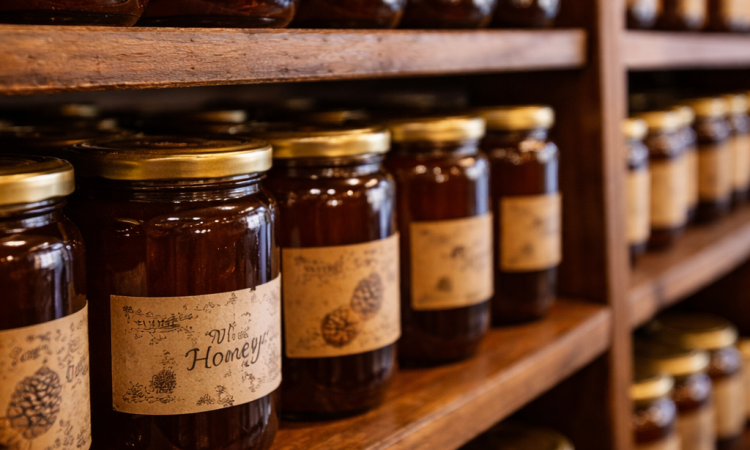
Thassos Pine Honey: A Taste from the Island’s Forests
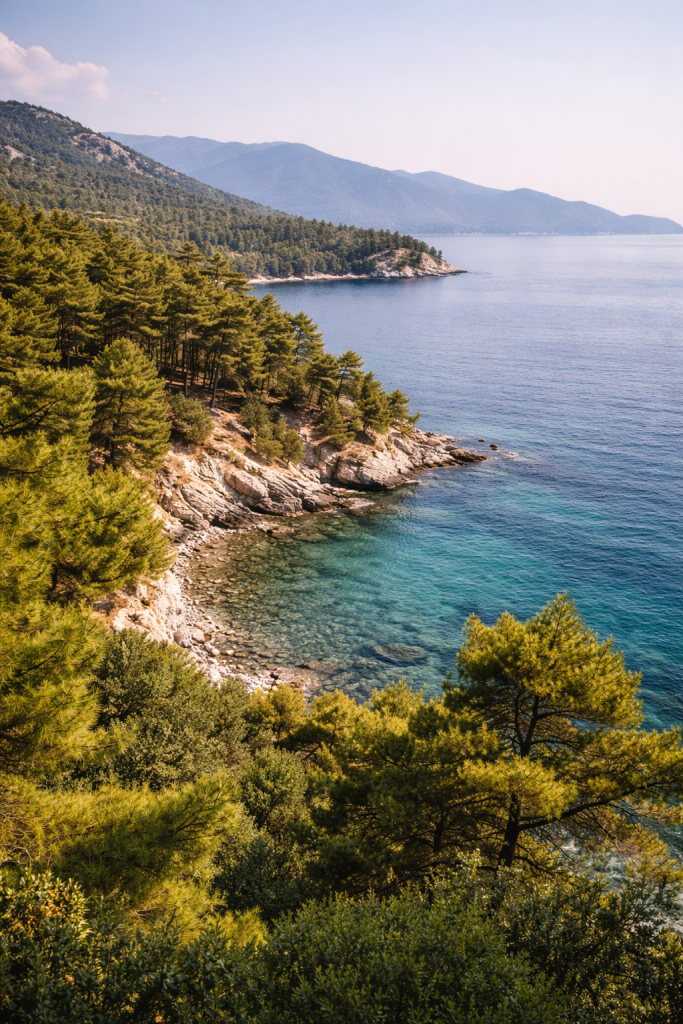
Thassos is often remembered for its beaches and clear blue water, yet the island has another side that reveals itself more quietly. Just beyond the coastline, pine forests stretch across the hills, filling the air with a warm, resinous scent, especially in summer.
It is from these forests that Thassos pine honey comes. Deeply connected to the island’s landscape, it is a flavour many visitors encounter for the first time during their stay, often without realising how closely it reflects the rhythm of life here.
What makes pine honey different
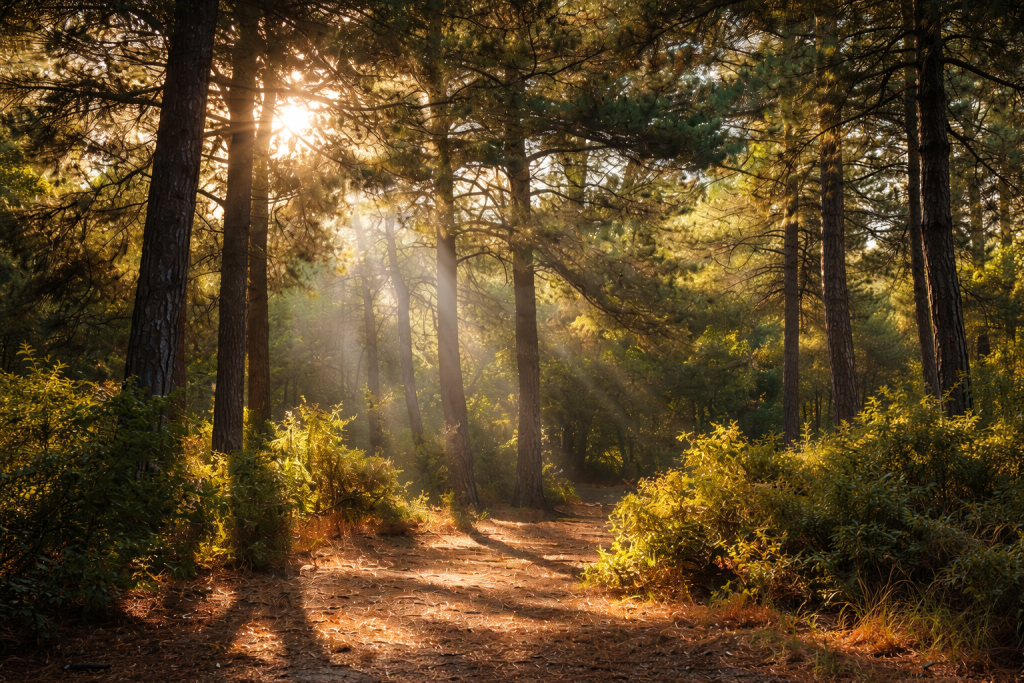
Unlike most types of honey, pine honey is not produced from flower nectar. Instead, it comes from natural secretions found on pine trees, collected by bees living deep within the forest. This process gives the honey its distinctive character.
Pine honey is darker in colour, less sweet than blossom honey, and noticeably richer. Its flavour develops slowly on the palate, with earthy notes and a gentle depth that feels balanced rather than sharp. It is the kind of sweetness that doesn’t overwhelm, but lingers quietly.
The forests behind the flavour
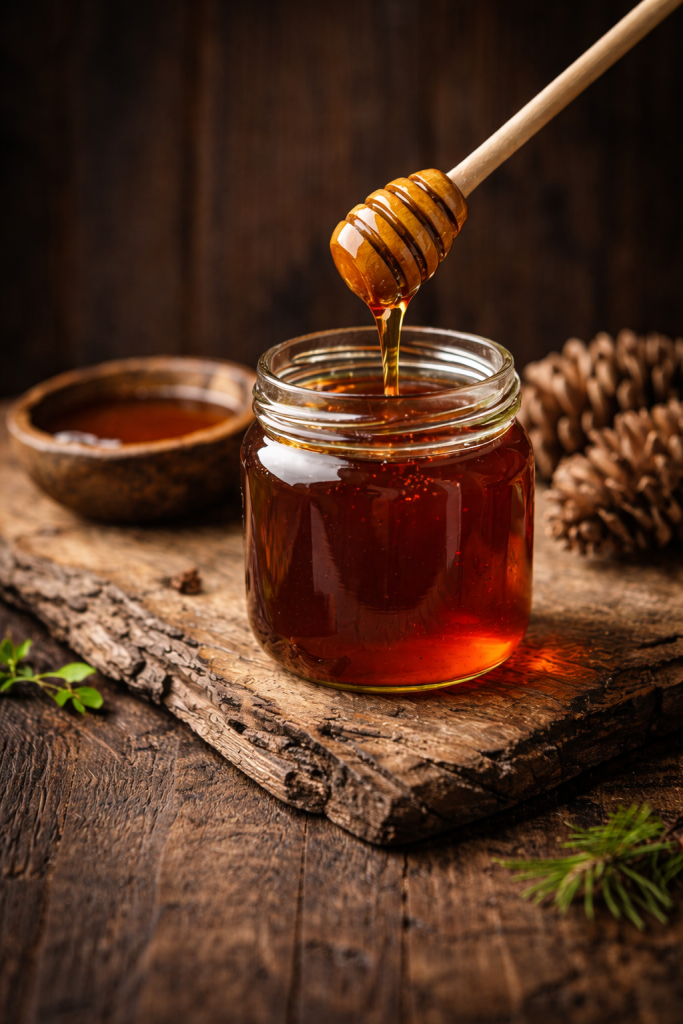
Large parts of Thassos are covered with pine trees, especially away from the busy beaches. These areas feel different. The light is softer, the air cooler, and the pace slower. Sunlight filters through branches, cicadas hum in the background, and time seems to stretch.
That atmosphere is reflected in the honey itself. Its taste often brings to mind shaded paths, warm afternoons and the stillness of being surrounded by green. Pine honey feels grounded, shaped by the land rather than produced from it.
A long-standing connection to the island
Pine honey is not a recent discovery on Thassos. Since antiquity, honey has played an important role in the island’s diet and local economy. Thassos was known in ancient times for its natural resources, including marble, olives and honey.
The island’s extensive pine forests offered a reliable source of honey, particularly during periods when other agricultural products were limited. Over generations, beekeeping knowledge was passed down, guided by the seasons and the natural cycle of the forests.
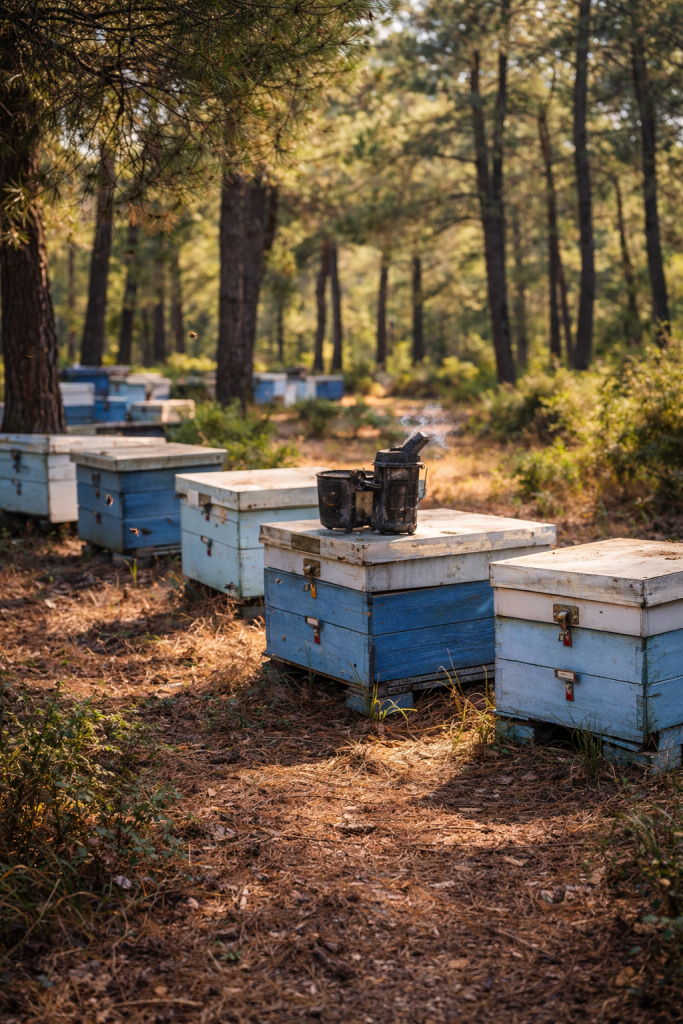
Even today, many small producers continue to work in traditional ways, moving their hives according to climate conditions and the life of the pine trees, rather than industrial schedules.
How locals enjoy it
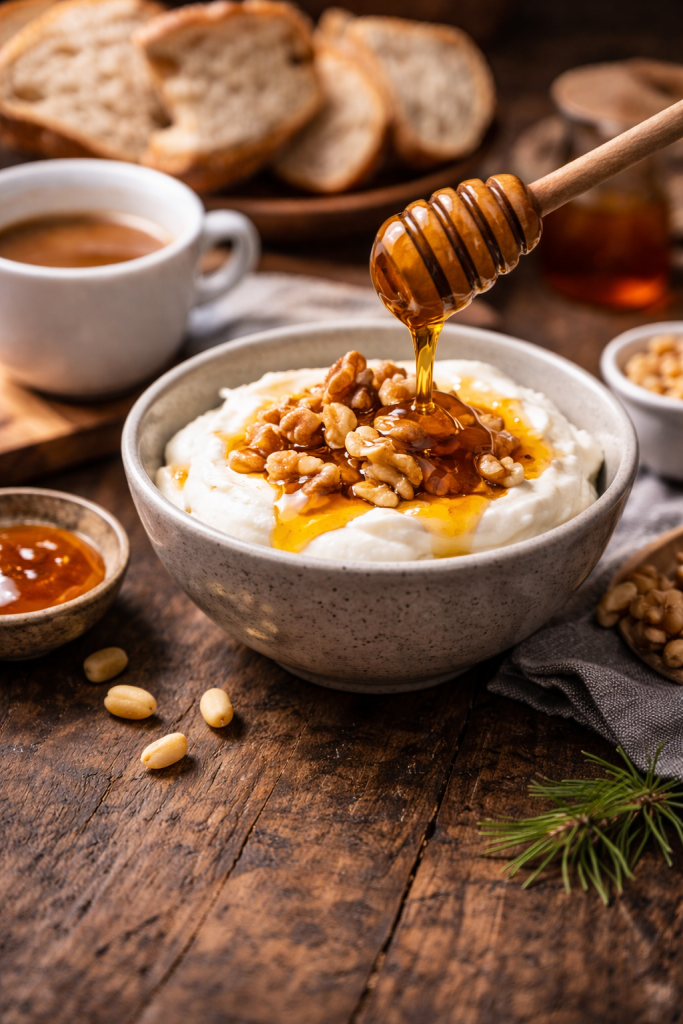
On Thassos, pine honey is part of everyday life rather than a special occasion. Locals often enjoy it simply, drizzled over yoghurt with nuts, spread on bread or rusks, or paired with cheese. It appears in small desserts and home cooking, used naturally and without ceremony.
This simplicity reflects how food is approached on the island. Ingredients are appreciated for what they are, not dressed up or overworked.
Where visitors usually find it
Most visitors come across pine honey in small local shops, village markets or directly from producers around the island. Many choose to take a jar home, not as a souvenir to display, but as a way to carry a familiar taste of summer back with them.
Long after the trip ends, that flavour often brings back memories of warm days, forest walks and time spent outdoors.
A quieter part of the Thassos experience
Exploring the greener side of Thassos offers a different rhythm from the beaches. Short walks or drives lead into wooded areas where the island feels calmer and more introspective.
Staying at iliomagic, these details often shape the experience naturally. Guests may arrive drawn by the sea, but leave remembering conversations about local flavours, nature and simple pleasures. These moments, unplanned and unforced, often define how people connect with the island.
You can explore more stories inspired by local life, flavours and nature in our Food & Local Flavours section.
A taste that reflects the island
Thassos pine honey reflects the essence of the island itself. Natural, grounded and unhurried.
In the same way, staying at iliomagic is about slowing down, connecting with the surroundings and experiencing Thassos through its landscapes, its flavours and its everyday rhythms. Sometimes, it is the quiet details that stay with you the longest.